Central to delivering student-centered education is the continuous feedback loop reflected in the NISCE Instructional model. Thoughtful assessment guides developmentally appropriate differentiated instruction, which promotes student engagement which in turn leads to success as defined for each individual student. Positive and supportive school relationships permeate and sustain each element of the model.In Part 1 of 6, we offer brief tips to help individuals and schools support a true focus on … [Read more...]
Giving Voices to the Issues – NISCE Roundtables

On April 25th, the National Institute for Student-Centered Education will host its first NISCE Roundtable. The topic will be Bullying: Fostering Empathy and Action in Schools, and will be held as a follow-up to our screening of Bully. We are scheduling a series of such Roundtables in the months ahead on topics drawn from our study of student centered education. We believe that by inspiring honest, informed, and respectful conversations around critical issues in education that we will help us … [Read more...]
NISCE Hosts Boston Screening of “Bully”

The film "Bully" premiered on March 30th in New York and Los Angeles, but on April 13th NISCE will host the inaugural Boston-area screening of the film at the Landmark Kendall Cinema in Cambridge. Immediately following the show, Dr. Richard Weissbourd, Harvard lecturer, will provide commentary and lead a short discussion with the audience.The documentary, which follows five students who are bullied over the course of one year, seeks to expose the tragic effects of bullying. By giving intimate … [Read more...]
The Importance of Relationships Through All Educational Contexts

Relationship is Fundamental The importance of relationship carries on through constructivist, traditional, religious, military, and non-traditional models. It is so fundamental, in fact, that it could be said that the ability to form positive and nurturing relationships with students is the sine qua non of a student-centered approach. The primary importance of relationship is also a well established factor in research on the development of resilience in children.Seeking to identify the factors … [Read more...]
The Importance of Relationships and the Basics of Self-Teaching
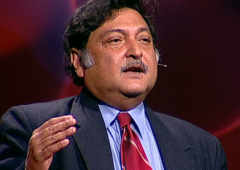
Sugata Mitra Teaches About Self-Teaching Consider the connection between relationship and self-teaching.At first glance this will appear to be a contradiction. It would seem that self-teaching is, by definition, outside the realm of relationship. Of the list of educational context categories—military, traditional, Montessori, et cetera it is the least dependent on adult guidance. On further inspection, we discover that the very nature of learning is deeply affected by relationship at the … [Read more...]
The Brain’s Development and the Importance of Relationships and Education

In their book, Born for Love, Bruce Perry and Maia Szalavitz report the ability of a child to access higher level problem solving, executive functioning, and thinking skills ultimately depends on the learned ability to self-regulate, and that these capacities are developed through consistent and reliable connection with safe and caring adults.In simple terms, it is the care and protection of adults that allows infants and children to develop neural pathways in the frontal lobe that transcend … [Read more...]
Redshirting: What Would You Do?
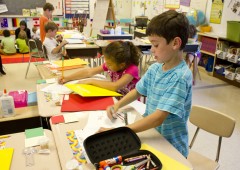
CBS' 60 Minutes recently reported on the idea some parents are implementing of holding a child back one year or "Redshirting" kindergarten students. The approach is driven by desire to have that particular student be among the oldest, rather than the youngest, in their class when they started school. The hope is that by doing so the child would be further along developmentally, be more of a leader over time, do better in sports, and have an overall advantage over the other children in his/her … [Read more...]
Can a Military School Be Student-Centered?
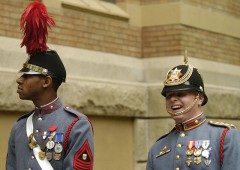
As an institution, military education would seem to be something other than student-centered. Individuality may seem to be discouraged, with “service before self” being seen as the highest value. In other places along the continuum we have explored the role of the teacher and his or her capacity to be student-centered even in contexts that do not appear to have the individual learner as a central focus. Is it possible for an individual instructor or officer in a military school or for an entire … [Read more...]
The Value of Military Schools
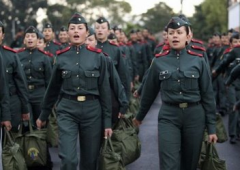
The value of a military style education for some students is well established and recognized by most educators. The inculcation of discipline, the value of giving oneself to a greater cause, the development of a selfless world view, the push toward excellence and achievement at a high level, all of these have great appeal and may be shown to be highly effective when paired with a population of students who are well equipped for this style of learning.Attempts have even been made to adopt … [Read more...]
The Value of Religious Schools
In religious schools, we may expect to encounter a very different conception of the role of education in a student’s life. Because there is often an essential and openly professed drive towards uniformity and the cultivation of religious values, the individual may appear to be secondary to the mission.However, a statement of purpose for one such school, the Covenant School in Arlington, MA, reflects the synergy between values formation and acquisition of knowledge (or wisdom): "We believe … [Read more...]